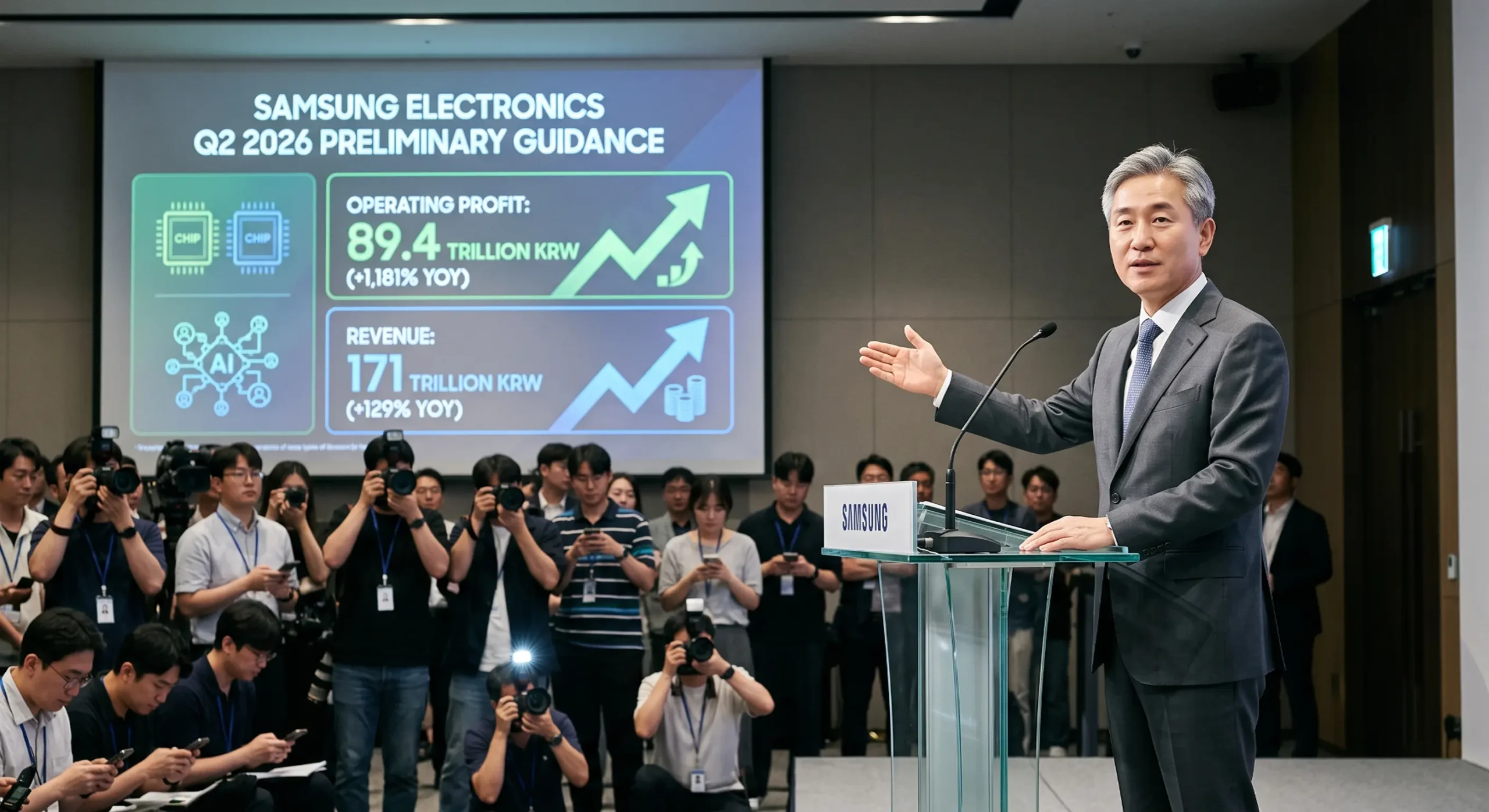
Samsung Electronics Posts Record-Shattering Q2 2026 Guidance Fueled by AI Chip Demand
Samsung Electronics has issued its preliminary earnings guidance for the second quarter of 2026, revealing an unprecedented surge in profitability. Driven by the relentless global demand for artificial intelligence infrastructure, the South Korean tech behemoth anticipates a nearly 19-fold increase in its operating profit compared to the same period last year.
The Financial Breakdown
For the April to June quarter, Samsung projects its consolidated operating profit to hit approximately 89.4 trillion Korean won (roughly $58.8 billion). This represents an astounding 1,181% jump from the 4.68 trillion won recorded in Q2 of 2025, and comfortably surpasses the company’s entire operating profit for the year 2025.
Revenue is also experiencing massive growth. The company expects consolidated sales to reach 171 trillion won ($112.5 billion), a 129% increase year-over-year.
| Metric | Q2 2026 (Estimate) | Q2 2025 (Actual) | Year-over-Year Growth |
| Consolidated Sales | 171 Trillion KRW | 74.57 Trillion KRW | +129% |
| Operating Profit | 89.4 Trillion KRW | 4.68 Trillion KRW | +1,181% |
AI Propels the Memory Market
The primary catalyst for this historic financial performance is Samsung’s semiconductor business. As tech companies worldwide race to build and expand AI capabilities, the demand for High-Bandwidth Memory (HBM), conventional DRAM, and NAND chips has skyrocketed. This intense demand has tightened global supply chains, driving up chip prices and drastically expanding Samsung’s profit margins.
Industry analysts expect this memory shortage and elevated pricing environment to continue into next year as AI data center investments continue to scale.
Market Reaction and Adjustments
Despite the record-breaking numbers, Samsung’s stock experienced a drop of over 6% following the July 7th announcement. Market analysts attribute this counterintuitive reaction to a few key factors:
- Revenue Miss: The estimated sales of 171 trillion won fell slightly short of some market consensuses, which hovered around 172.18 trillion won.
- AI Spending Concerns: Broader investor apprehension is growing regarding the long-term sustainability of the current AI spending boom.
- Employee Provisions: The reported operating profit factored in significant deductions for a recently negotiated employee bonus structure. Under a new wage agreement, Samsung allocated a special performance bonus equivalent to 10.5% of business performance earnings to its semiconductor employees, effectively reducing the headline profit number.