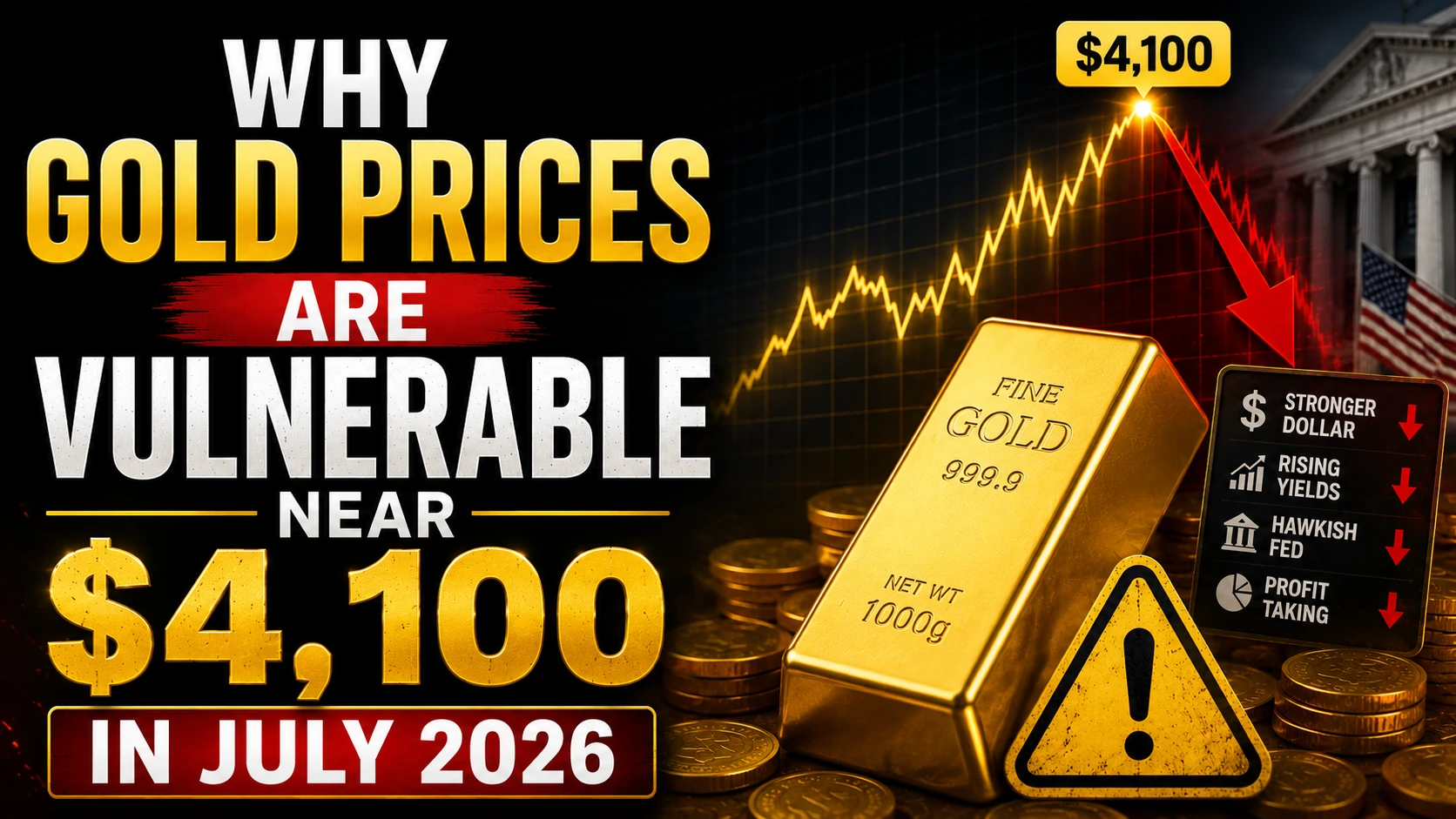
If you have been keeping an eye on the precious metals market lately, you’ve likely noticed the intense tug-of-war happening with gold. Right now, the yellow metal is hovering precariously near the $4,100 per ounce mark. For seasoned investors and everyday market watchers alike, this price point has become a fascinating battleground.
On one side, a rebounding US Dollar—fueled by expectations of Federal Reserve rate hikes—is dragging prices down. On the other, escalating geopolitical tensions in the Middle East are keeping safe-haven demand alive. Let’s explore what is really driving this volatility and what it means for the market moving forward.
Fed’s Hawkish Shadow: Why the Dollar is Bouncing Back
The primary weight pressing down on gold right now is the resurgence of the US Dollar. Recently, the greenback bounced off a one-week low, drawing renewed strength from the latest FOMC (Federal Open Market Committee) minutes. While policymakers showed some division over the exact trajectory of interest rates, the overarching sentiment remains stubbornly hawkish.
Inflation is still a persistent concern, fueled in part by robust consumer demand. Fed officials have hinted that maintaining tighter monetary policy might be necessary through the end of 2026. In fact, according to the CME Group’s FedWatch Tool, traders are currently pricing in a high probability—between 65% and 85%—of at least one more rate hike before the year concludes.
For gold, which yields no interest, a higher-rate environment is typically bad news. When the Fed hikes rates, traditional yield-bearing assets become more attractive. This causes the dollar to rally, making gold more expensive for international buyers. This macroeconomic headwind is exactly why bullion is struggling to gain momentum and seems vulnerable to further downside below $4,100.
Geopolitical Safety Net: US-Iran Tensions
If the macroeconomic picture is so bearish, why hasn’t the price of gold plummeted further? The answer lies in the Middle East. Geopolitical instability is the ultimate safety net for precious metals, and recent developments between the US and Iran have provided a substantial floor for prices.
Following a series of sudden military actions—including US strikes on Iranian military infrastructure and retaliatory attacks on US installations in Bahrain and Kuwait—global markets were understandably spooked. These escalations not only raise the specter of a broader regional conflict but also threaten to disrupt energy supplies through the Strait of Hormuz.
A spike in oil prices historically feeds directly into global inflation, which complicates the Fed’s job even more. However, market anxiety was slightly tempered after reports surfaced that diplomatic backchannels might still be open, with both nations potentially seeking a de-escalation deal. This glimmer of diplomatic hope allowed the US Dollar to regain its footing, momentarily dulling gold’s safe-haven appeal.
What’s Next for Investors?
We are currently witnessing a classic market standoff. Institutional analysts have already started adjusting their expectations; major banks like HSBC and Bank of America have recently trimmed their average gold price forecasts for 2026, citing the enduring strength of the dollar and the Fed’s reluctance to pivot toward rate cuts.
Yet, counting gold out during times of global uncertainty is always a risky game. The metal appears to be transitioning from a period of heavy sell-offs to one of cautious consolidation.
For now, $4,100 is the critical psychological and technical threshold to watch. If diplomatic efforts in the Middle East succeed and the Fed remains resolute in its fight against inflation, gold could easily slip further. However, any sudden breakdown in negotiations or a surprise softening in US economic data could quickly send investors rushing back to bullion.
Navigating today’s gold market requires balancing the cold, hard math of interest rates with the unpredictable reality of global geopolitics. Stay vigilant, keep an eye on upcoming inflation data, and remember that in a market this dynamic, flexibility is your best asset.