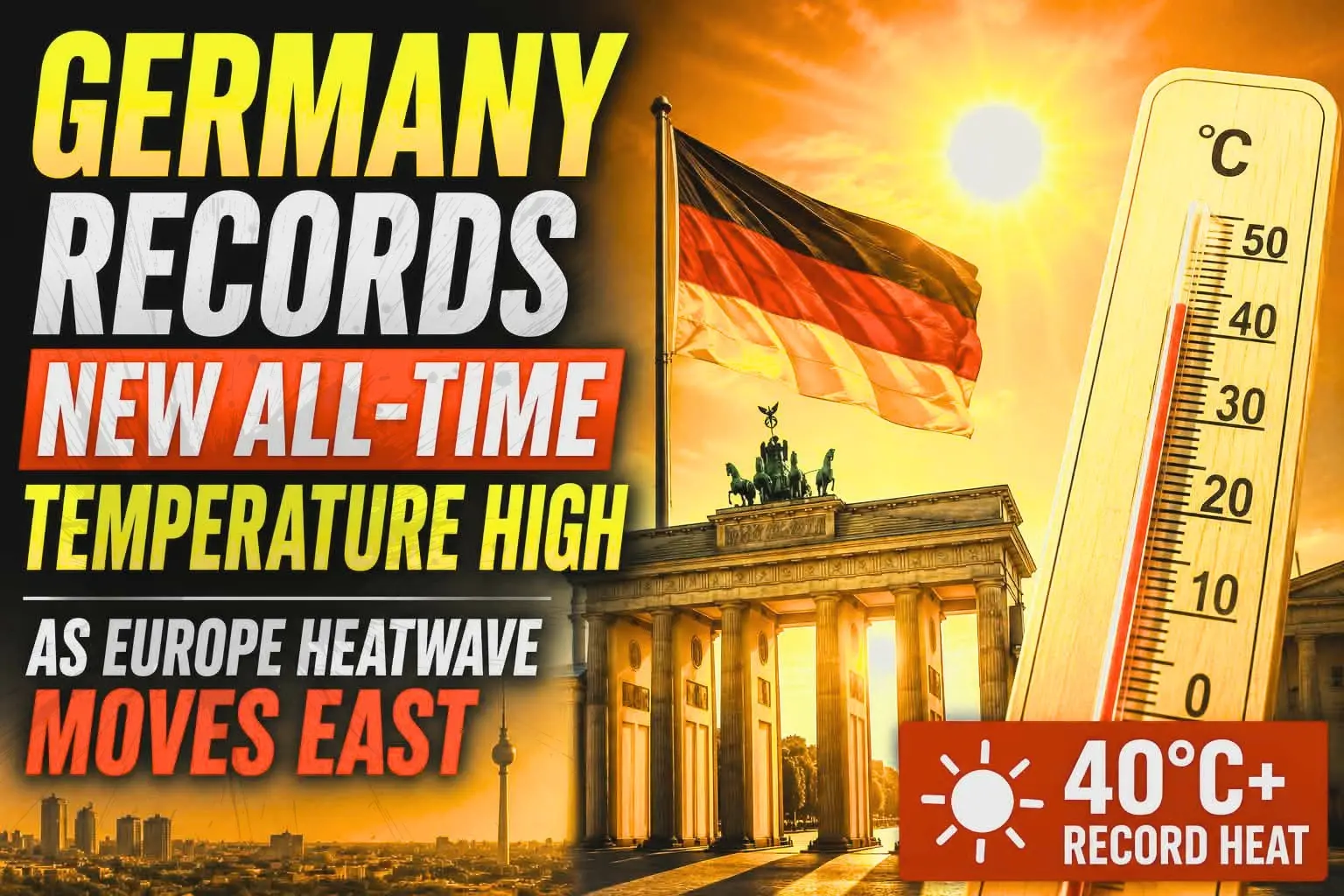
Historic European Heat Wave Scorches Germany as Extreme Temperatures Push Eastward
Unprecedented temperatures are currently sweeping across the European continent, with Germany experiencing some of the hottest days in its recorded history. The extreme weather has prompted national weather services to issue severe warnings, as the soaring heat brings heightened risks for public health, agricultural stability, and widespread wildfires.
The Meteorological Driver
Climatologists attribute the dramatic spike in temperatures to arid, sweltering air currents pushing up from southern Europe. Across numerous German municipalities, the mercury has eclipsed 40°C . Compounding the issue is the lack of nighttime cooling; evening temperatures remain unusually elevated, depriving residents of any meaningful relief from the oppressive conditions.
The crisis extends far beyond Germany’s borders. Neighboring nations, including France, Spain, Italy, and Poland, are battling similar climate extremes. Forecasters are closely tracking the system as it steadily migrates east, warning that Eastern Europe must brace for potentially historic heat in the approaching days.
Health and Safety Directives
In response to the crisis, medical professionals and health authorities are urging the public to take immediate precautions. To avoid heat exhaustion and heatstroke, officials recommend:
- Remaining indoors during peak sunlight hours.
- Maintaining rigorous hydration.
- Wearing breathable, loose-fitting garments.
- Postponing non-essential outdoor physical activities.
Special attention is being urged for highly vulnerable demographics, particularly the elderly, young children, and individuals managing chronic health conditions.
Environmental and Economic Toll
The combination of parched landscapes, intense sunshine, and gusty winds has drastically elevated the threat of forest fires. Emergency response teams and firefighters across Europe are maintaining a state of high alert, having already mobilized to suppress early-stage blazes in severely affected zones.
Simultaneously, the agricultural sector is sounding the alarm. The prolonged absence of rainfall is stripping vital moisture from the earth, placing crops in jeopardy. Agronomists warn that if the dry spell persists, it could severely throttle food production, leading to localized economic downturns and supply chain disruptions.
The Climate Connection
Environmental scientists emphasize that the increasing frequency and severity of these extreme weather events are direct consequences of global climate change. Driven by rising global temperatures, prolonged heat spells that were once considered generational anomalies are rapidly becoming the new normal.
While meteorologists predict that the current system may gradually cool later in the week, the underlying threat remains. Authorities and environmental advocacy groups are utilizing this latest record-breaking event to underscore the critical need for global greenhouse gas reductions and robust climate adaptation strategies to protect communities in the future.